


 Share
ShareEPDM Rubber Flooring Guide for Safe Play Areas
Wet-pour EPDM rubber flooring is the default safety surface for permanent playgrounds, splash pads, school yards and fitness areas, and for good reason. It is seamless, it can be built to a specific certified fall height, it takes any colour and graphic you want, it drains, and it is wheelchair accessible in a way that loose fill never will be. It is also the surface most often specified badly, because buyers write a thickness in millimetres and assume that is a specification. It is not.
This guide explains how an EPDM system is actually built, what separates good granules from cheap ones, how thickness relates to Critical Fall Height, what EN 1177 and ASTM F1292 really test, and what the tropical and coastal conditions of Vietnam do to the surface over time. The aim is to give you enough technical grip to write a specification a contractor cannot quietly downgrade, and to recognise a poor installation while it is still being laid rather than two rainy seasons later.
If you are choosing between surface types rather than detailing one, read the playground surfacing comparison first. For the broader project context, the outdoor playground equipment guide covers where surfacing sits in the sequence.
What wet-pour EPDM is
Wet-pour is a two layer, in situ cast system. Rubber granules are mixed with a polyurethane binder on site, poured, screeded and trowelled to level, then left to cure. The result is a single monolithic sheet with no joints.
- Wear layer. The visible top layer, typically made of EPDM granules, a synthetic rubber that is UV stable and colour fast because the pigment is in the rubber itself rather than a coating.
- Shock absorbing base layer. Usually SBR granules, recycled black rubber, bound with polyurethane. This is the layer that does most of the impact attenuation work, and its thickness is what you vary to achieve a given fall height.
Because the base layer is cheaper than the wear layer, the whole system is economical: you pay for colour only where colour is visible, and for impact performance where impact happens. That same economics is why unscrupulous installers cut the base layer and not the top: the finished surface looks identical and performs far worse.
The full build-up, from the ground up
An EPDM surface is only as good as what is under it. In practice the base is where most premature failures originate.
- Subgrade. Compacted, stable, correctly graded for falls. Soft or uneven subgrade leads to settlement, which cracks or dishes the surface above.
- Sub-base. Compacted graded aggregate where a bound base is not used, providing load spread and drainage.
- Base. Either permeable asphalt or concrete, or a well compacted aggregate base depending on the design. Concrete gives the most stable and predictable result but must be laid with falls and drainage, and must be fully cured and dry before the rubber goes down.
- Primer. Applied to the base so the shock pad bonds rather than delaminating. Skipping primer is a common and invisible shortcut.
- SBR shock absorbing layer. Poured to the thickness required by the fall height.
- EPDM wear layer. Typically laid at a nominal thickness in the region of 10 to 15 mm depending on granule size and system, poured while the base layer is still capable of bonding or after priming, and trowelled to a consistent finish.
- Edge restraint. Kerb, edging or a rebated concrete upstand so the surface edge is supported and does not curl or peel.
- Drainage. Falls to gullies or perimeter drainage. A permeable surface over a base that holds water is the single most common cause of early failure in Vietnam.
Granule quality: where the money actually goes

Two surfaces that look the same on day one can be very different products. The variables worth writing into a specification:
EPDM purity and rubber content
Granules sold as EPDM vary considerably in actual polymer content, with filler making up the difference. Higher polymer content gives better elasticity, tear resistance and colour retention. Low content granules chalk, dust off and go brittle. Ask for the specification of the granule, not just its colour.
Colour stability
Genuine EPDM is pigmented throughout. Beware coated or painted granules, which look like EPDM and fade fast, particularly in strong UV. Bright reds, oranges and blues expose poor pigment quality soonest.
Granule size and grading
Typical wear layer granule sizes are in the 1 to 4 mm range, with finer grading giving a smoother, denser surface and coarser grading giving more texture and slightly more binder demand. Consistent grading matters more than the exact size; poorly graded material makes trowelling uneven.
Binder
Polyurethane binder quality and, critically, binder ratio govern strength and durability. Too little binder and the surface sheds granules under foot traffic. Too much and it seals, loses permeability and becomes slick and shiny. Single component moisture cured binders behave differently in high humidity than in dry climates, which matters a great deal in Vietnam.
Recycled content and chemistry
Where recycled rubber is used in the base layer, REACH is the relevant reference point for restricted substances, and it is reasonable to require declarations. Where coatings or printed graphics are applied, EN 71-3 on the migration of certain elements is the relevant toy safety reference.
Thickness versus Critical Fall Height
This is the part buyers most often get wrong. There is no universal table that converts millimetres into a safe fall height, because performance depends on granule type, granule grading, binder ratio, layer construction, base type and temperature. The only defensible number is the one produced by testing the actual system.
Under EN 1177, a system is tested to determine its Critical Fall Height, and the certified value must equal or exceed the free height of fall of the equipment above it. Under ASTM F1292, the system must achieve a Head Injury Criterion of no more than 1000 and a g-max of no more than 200 at the stated drop height. Both are pass or fail laboratory results tied to a described build-up.
| Decision | What increases it | Effect on impact performance | Effect on cost and life |
|---|---|---|---|
| SBR base layer thickness | Higher free height of fall to protect | Primary driver of Critical Fall Height | Main cost variable in the system |
| EPDM wear layer thickness | Higher traffic, need for durability | Minor contribution to attenuation | Strong effect on wear life and cost per m2 |
| EPDM polymer content | Higher grade granule | None directly | Better colour retention, less chalking, longer life |
| Binder ratio | More binder | Stiffer surface, can reduce attenuation | Stronger but less permeable if overdone |
| Base type | Concrete instead of aggregate | Test result is base dependent, so must be tested as built | Higher capital cost, far more stable long term |
| Drainage design | Correct falls and outlets | Preserves performance over time | Cheap to design in, expensive to retrofit |
Practical specification language: state the highest free height of fall for each impact area, require the installer to propose a system build-up certified to meet or exceed it, and require the test report for that build-up on the base type being used. Then require the as built thickness to be verified, for example by core sampling at agreed locations, because thickness is the one thing that becomes unverifiable once the job is finished and paid for.
Vietnam climate: what really stresses the surface
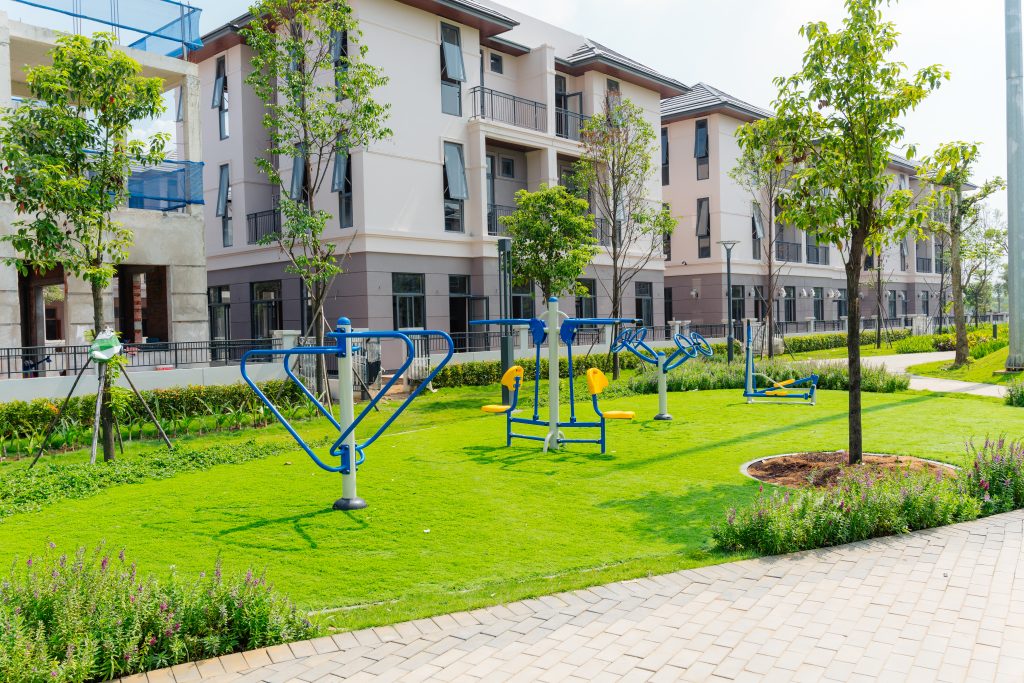
The tropical monsoon climate of Vietnam attacks wet-pour surfaces on four fronts at once.
- UV intensity. High year round UV degrades poor pigments and low grade polymer quickly. This is where cheap granules reveal themselves within the first two years.
- Heavy rainfall. Intense rain overwhelms undersized drainage. Standing water sits in low spots, encourages algae and biofilm, makes the surface slippery and accelerates binder breakdown.
- Humidity during installation. Moisture cured polyurethane binders react to ambient humidity and to moisture in the base. Pouring onto a damp or insufficiently cured concrete base is a leading cause of delamination and blistering. Installation windows have to respect this, not just the calendar.
- Heat. Dark surfaces reach high temperatures in direct sun, which affects both comfort and, at extremes, the surface behaviour. Shade planning is a surfacing decision as much as a comfort decision, particularly for toddler areas and splash pad decks.
On coastal sites add salt exposure, which mainly attacks the equipment and fixings rather than the rubber, but which shortens the life of everything around the surface.
Where EPDM is used beyond playgrounds
The same system, with different specification emphasis, serves several applications. Splash pad decks need slip resistance and drainage priority over fall height, and interact with water treatment chemistry, which is covered in the guide to splash pad and water playground design. Outdoor fitness areas need durability and impact resistance under equipment loads rather than deep attenuation, discussed in the outdoor fitness equipment guide. Sports areas fall under EN 14877 for synthetic outdoor sports surfaces, a different performance framework. Indoor applications trade weathering for hygiene and fire performance, covered in the indoor playground design guide. TNTY supplies these systems under the Green Floor and TNTY Floor lines, with partners including Robertson Recreational Surfaces and Sports Surface Specialties; the range is set out on the products page.
Installation quality control on site
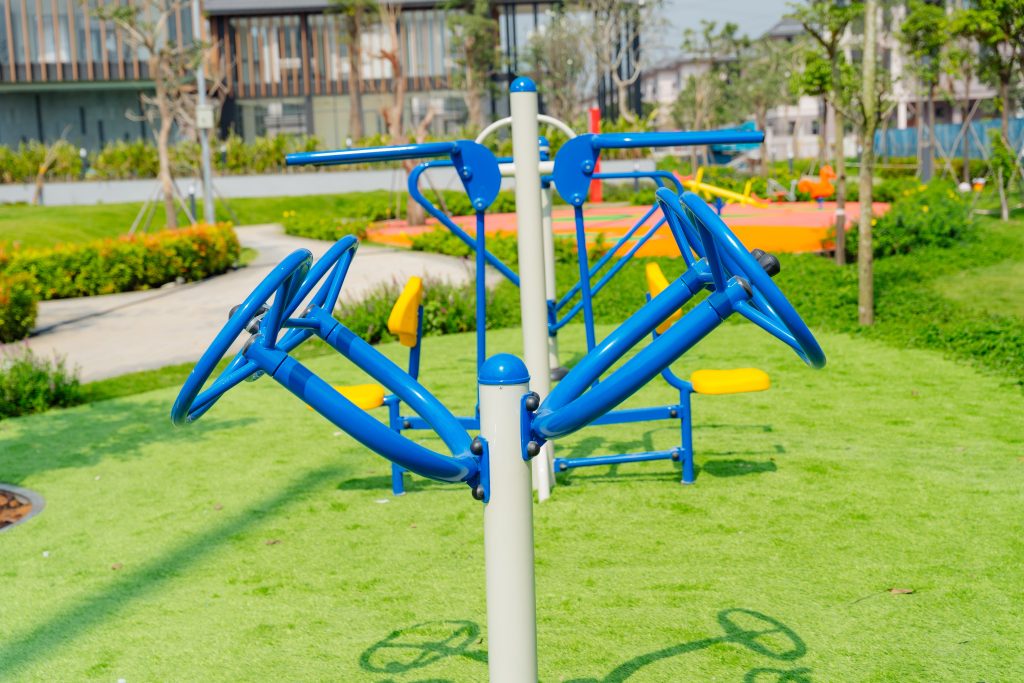
A specification is only as strong as the supervision behind it. Things worth checking during the works:
- Base is cured, dry, clean and to the designed falls before priming. Ponding on the bare base predicts ponding on the finished surface.
- Primer applied and given its stated open time.
- Mixing controlled: consistent binder ratio, consistent batch size, no site improvisation to make material stretch further.
- Base layer thickness checked as it is laid, using depth gauges and screed rails, not judged by eye.
- Wear layer laid in continuous passes with worked joints between batches, so the seam between two batches does not become a visible weakness.
- Colour changes and graphics cut and butted while material is workable.
- Edges properly restrained and terminated against kerb or upstand.
- Curing protected from rain and traffic for the specified period.
- Post installation inspection before opening, plus core samples where verification of thickness was specified.
Lifespan, maintenance and repair
A properly specified and installed wet-pour surface on a stable, well drained base is a long life asset. It does not need daily attention, but it does need a regime.
- Routine. Sweep and remove leaves and debris, especially from drainage points. Debris that stays wet is what grows algae.
- Periodic. Wash to remove biofilm. Inspect edges, seams, colour transitions and areas around equipment posts, which are the highest stress zones.
- Annual. Assess overall condition, granule loss, hardening, and any settlement. Confirm that the surface still meets the fall height requirement of the equipment above it, particularly if equipment has been added or modified.
- Repair. Localised patches are possible and are the normal remedy for vandalism or isolated failure. Patches are visible; matching colour exactly on an aged surface is difficult, which is an argument for keeping a small stock of the original granule.
Slot this into the wider inspection regime described in the playground maintenance and inspection checklist. The lifecycle cost logic, which is where EPDM usually beats cheaper alternatives, is set out in playground project cost drivers.
Frequently asked questions
How thick does EPDM safety flooring need to be?
It depends entirely on the free height of fall you must protect against, plus the granule type, binder ratio and base. The correct approach is to state the fall height and require a certified system build-up, then verify the as built thickness. Any supplier who quotes a thickness for a fall height without reference to a test report is guessing.
What is the difference between EPDM and SBR?
EPDM is a virgin synthetic rubber, coloured throughout, UV stable, used for the visible wear layer. SBR is recycled rubber granulate, normally black, cheaper, and used for the shock absorbing base layer. A system using SBR throughout with a thin coloured coating is not the same product and will not age the same way.
Is wet-pour EPDM wheelchair accessible?
Yes, it is one of its main advantages over loose fill. It is a firm, stable, seamless surface. Where accessibility is a formal requirement, specify compliance with ASTM F1951 for the surface on accessible routes and read the guide to inclusive and accessible playground design.
Why is my rubber surface shedding granules?
Usually insufficient binder, poor mixing, contamination during installation or laying in unsuitable conditions. It can also be normal minor loss of loose surface granules in the first weeks. Persistent shedding across an area is an installation defect, not wear, and should be raised under warranty.
Can EPDM be laid straight onto compacted soil?
No. It needs a stable, properly drained base. Laid on unstable ground it will settle, crack and dish, and the impact performance certified on a laboratory base will not be reproduced. Base preparation is not the place to economise.
How long does installation take?
Mixing and pouring is comparatively fast; the programme is driven by base preparation, base curing and the curing of the poured layers, and by the need for dry weather. Wet season projects should allow generous float, and the base must be genuinely dry before the rubber is laid.
Talk to us before you tender the surfacing
TNTY Construction Company has supplied and installed play and sports surfacing in Vietnam since 2017, from offices in Ho Chi Minh City and Solna, Sweden, on projects including work at Tan Son Nhat, Noi Bai, Da Nang, Cam Ranh, Phu Quoc International and Cat Bi airports, NovaWorld Phan Thiet and Hoa Thuan Dong Ward Park in Da Nang. We offer a free site survey and consultation covering base condition, drainage, fall height schedule and a recommended certified build-up. See our brands, review our projects, or reach us via the contact page, tel 84 28 66 89 8888, hotline 84 937 501 501.